


Jasmine Milk Tea: Easy Recipe, Ingredients & Boba Tips

Jasmine Milk Tea: Easy Recipe, Ingredients & Boba Tips
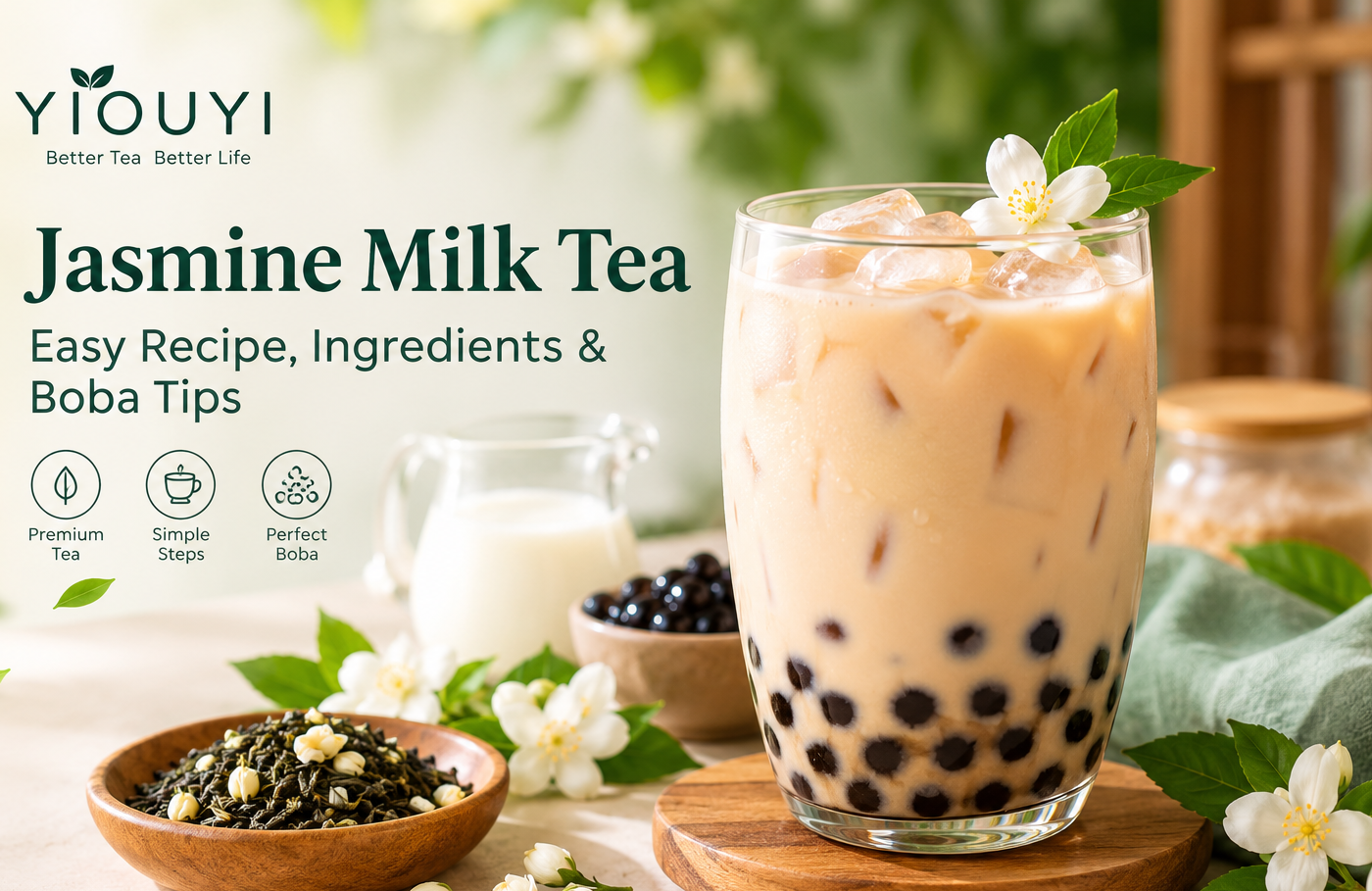
Jasmine milk tea is made by combining brewed jasmine tea with milk and a sweetener, creating a creamy drink with a distinctive floral aroma. It can be served hot or over ice, and tapioca pearls can be added when you want a jasmine boba tea. The key to a balanced cup is brewing the jasmine tea strongly enough to remain noticeable after milk and ice are added, without over-extracting the tea and creating bitterness.
What Is Jasmine Milk Tea?
Jasmine milk tea is a milk tea made with jasmine-scented tea, usually jasmine green tea, together with milk and a sweetener.
Unlike a traditional black milk tea, which often has a bold, malty tea character, jasmine milk tea is typically lighter and more floral. The exact flavor depends on the tea base, jasmine scenting, brewing method, type of milk, and amount of sweetener.
Jasmine tea itself is not necessarily a separate botanical tea species. Many jasmine teas begin with a true tea such as green tea and are scented with jasmine flowers. YIOUYI's own tea guide lists jasmine green tea among its green-tea options and explains that the final flavor of tea depends on factors including the tea type, processing, and brewing method.
That distinction matters when making milk tea because the underlying tea base still influences how the finished drink tastes.
What Does Jasmine Milk Tea Taste Like?
Jasmine milk tea is usually floral, creamy, mildly sweet, and refreshing.
The jasmine aroma is one of its defining characteristics. A well-balanced version should let you notice the floral character while still tasting the tea and milk.
The flavor can change significantly depending on the ingredients:
Ingredient | Effect on the drink |
Jasmine green tea | Floral, fresh tea character |
Milk | Creaminess and body |
Sugar or syrup | Sweetness and balance |
Ice | Cooling and dilution |
Tapioca pearls | Chewy texture and additional sweetness |
Honey | A more rounded, distinctive sweetness |
Plant-based milk | Different texture and flavor depending on the variety |
One common mistake is making the tea too weak before adding milk. A cup that tastes perfect before adding milk may become noticeably flat once milk and ice are incorporated.
For jasmine milk tea, think about the finished drink rather than judging the tea concentrate by itself.
Jasmine Milk Tea Ingredients
A simple serving can be made with five basic ingredients:
Jasmine green tea
Hot water
Milk
Sweetener
Ice, for an iced version
For jasmine boba tea, add cooked tapioca pearls.
There is no single mandatory recipe ratio because jasmine teas differ in leaf style, strength, and scenting, while milk also varies in flavor and richness. The best starting point is to build a strong tea base, then adjust the milk and sweetness according to taste.
How to Make Jasmine Milk Tea
Step 1: Brew the Jasmine Tea
Start with your jasmine green tea and fresh water.
Because many jasmine teas use a green tea base, avoid automatically treating them like a strong black tea. The Tea and Herbal Association of Canada recommends around 80°C / 185°F for green tea, with a typical steeping range of 1–3 minutes. The UK Tea & Infusions Association similarly recommends around 80°C for green tea and lists approximately 2–3 minutes for jasmine tea.
A useful starting point for jasmine milk tea is:
Water temperature: about 80°C / 176°FSteeping time: about 2–3 minutes
Your tea manufacturer's instructions should take priority because different jasmine teas can require different preparation.
The goal is not simply to make the tea stronger by steeping it for a very long time. Over-extraction can make a delicate green tea base taste harsh.
Step 2: Strain the Tea
Remove the tea leaves or tea bag once the desired strength is reached.
Leaving the leaves in the water while preparing the rest of the drink can continue extraction and alter the flavor.
Step 3: Add Your Sweetener
Sugar dissolves more easily while the tea is warm.
You can use:
Granulated sugar
Simple syrup
Honey
Another sweetener suitable for your recipe
Start with a modest amount and taste the tea before adding more. This makes it easier to control the final sweetness.
Step 4: Add the Milk
Add milk to the brewed jasmine tea and stir.
A practical starting point is to use enough milk to soften the tea without completely covering its floral character.
For a stronger tea-forward drink, use less milk.
For a creamier drink, increase the milk gradually.
This is particularly important with jasmine tea because excessive milk can make the floral aroma less noticeable.
Step 5: Serve Hot or Iced
For hot jasmine milk tea, simply combine the warm tea, sweetener, and milk and serve immediately.
For iced jasmine milk tea, let the tea cool before pouring it over ice. Remember that ice will dilute the beverage, so the tea base should generally be brewed with enough strength to remain flavorful after chilling.
How to Make Iced Jasmine Milk Tea
Iced jasmine milk tea is one of the easiest variations to make.
Prepare the tea concentrate first, remove the leaves, and sweeten it while warm. Allow it to cool, then combine it with milk and pour over ice.
A simple process is:
Brew → strain → sweeten → cool → add milk → pour over ice
If the finished drink tastes watery, the problem may not be the amount of milk. It may be excessive ice dilution or a tea base that was too weak.
A stronger tea base is usually a better solution than simply adding more tea leaves to an already finished drink.
Can You Add Boba to Jasmine Milk Tea?
Yes. Jasmine milk tea works well with tapioca pearls when you want a jasmine boba tea.
The floral tea profile provides a different foundation from traditional black milk tea, while tapioca pearls add the chewy texture associated with bubble tea.
For a balanced drink, consider the overall sweetness. Tapioca pearls are often served with their own syrup or sweetness, so a jasmine milk tea that tastes appropriately sweet before adding boba may become sweeter once the pearls are included.
If you are preparing jasmine boba for a café, test the complete finished recipe rather than testing the tea and topping separately.
What Is the Best Tea for Jasmine Milk Tea?
For the most recognizable jasmine milk tea style, jasmine green tea is a logical starting point.
However, jasmine tea can be made using different tea bases, so the label alone does not tell you everything about the finished drink.
The base tea influences:
Strength
Astringency
Aroma
Body
Compatibility with milk
Final color
YIOUYI's tea range includes Yiouyi Jasmine Green Tea, making jasmine green tea a practical option for businesses developing jasmine-based beverages.
You can also compare jasmine with other tea styles in YIOUYI's broader YIOUYI Types of Tea guide
For commercial buyers evaluating jasmine tea, it is worth looking at the actual product specifications, preparation requirements, packaging, and supply terms instead of choosing based only on the word "jasmine."
Which Milk Works Best?
There is no universally best milk for jasmine milk tea.
Dairy Milk
Cow's milk provides a familiar creamy texture and can soften the sharper edges of tea.
Whole milk generally produces a richer beverage, while lower-fat milk can create a lighter result.
Oat Milk
Oat milk can provide a creamy texture and a mild sweetness that works well with floral tea.
However, different oat milks vary considerably, so test the exact product you intend to use.
Soy Milk
Soy milk can create a fuller beverage and is another common option for milk tea recipes.
Its flavor is more noticeable than some other plant-based milks, so the final combination should be tested rather than assumed.
Other Plant-Based Milks
Almond, coconut, and other plant-based options can change both the flavor and texture of jasmine milk tea.
When developing a café recipe, consistency matters more than simply choosing the milk that sounds best. Test the actual milk, tea, sweetener, ice, and toppings together.
Why Does Jasmine Milk Tea Taste Bitter?
If your jasmine milk tea tastes bitter, several factors may be responsible.
Water Too Hot
Using water that is too hot can make a delicate green tea base taste harsh. Around 80°C is a useful starting point for green tea, but the tea's own brewing instructions should take priority.
Steeping Too Long
A longer steep is not always the best way to create a stronger milk tea.
Try reducing the steeping time and adjusting the amount of tea instead.
Too Much Tea
Increasing the tea quantity can create strength, but using an excessive amount may produce an unbalanced cup.
Sweetness Is Too Low
Sugar does not remove bitterness, but sweetness changes the way tea bitterness and astringency are perceived. If your recipe contains very little sweetener, the tea's sharper characteristics may be more obvious.
The Milk or Tea Is Out of Balance
A strong tea with very little milk produces a different result from a heavily milky drink. Adjust the ratio gradually rather than changing several ingredients at once.
How to Make Jasmine Milk Tea More Floral
When the jasmine aroma disappears after adding milk, there are several practical adjustments you can test.
First, make sure the tea itself has a noticeable jasmine aroma before adding the other ingredients.
Second, avoid relying on an extremely long steep to create a stronger drink. Instead, test a slightly higher tea-to-water ratio while maintaining a controlled steep.
Third, do not overload the drink with strongly flavored syrups or toppings. Jasmine is relatively delicate compared with ingredients such as chocolate, caramel, or intensely flavored fruit syrups.
The objective is balance: the tea should remain identifiable after milk, sweetener, and ice are added.
Hot vs. Iced Jasmine Milk Tea
Both versions use the same basic concept, but they need slightly different recipe testing.
Feature | Hot Jasmine Milk Tea | Iced Jasmine Milk Tea |
Serving | Warm | Chilled |
Ice | None | Required |
Dilution | Minimal | Higher |
Tea strength | Moderate to strong | Usually stronger base |
Texture | Softer, warm | Crisp and refreshing |
Boba | Optional | Optional |
Sweetener | Sugar or syrup | Syrup can blend easily |
For a commercial menu, do not assume that one recipe can simply be poured over ice without adjustment.
Ice introduces dilution, so the final beverage needs to be evaluated at serving temperature.
Jasmine Milk Tea for Bubble Tea Shops
For a café or bubble tea shop, making jasmine milk tea consistently involves more than finding a good recipe.
Businesses should document:
Tea quantity
Water volume
Water temperature
Steeping time
Milk quantity
Sweetener quantity
Ice quantity
Boba portion
Final serving size
This creates a repeatable recipe that staff can follow.
Consistency becomes particularly important when multiple employees prepare the same beverage. A drink that tastes excellent when made by one person can vary considerably when measurements and brewing conditions are left to personal judgment.
YIOUYI supplies tea and other bubble tea ingredients for commercial beverage applications, so businesses can evaluate tea bases alongside milk tea powders, toppings, and other menu ingredients.
For businesses interested specifically in the tea base, see YIOUYI Jasmine Green Tea product page
A Simple Jasmine Milk Tea Formula to Test
There is no universal formula that every tea shop must follow, but this is a useful starting framework for recipe development:
Tea base: Brew jasmine green tea according to the tea supplier's instructions.
Sweetener: Add enough to balance the floral tea without overwhelming it.
Milk: Add gradually until the desired creaminess and tea intensity are reached.
Ice: Add according to the final serving size and desired dilution.
Tapioca pearls: Add as an optional topping, accounting for their contribution to sweetness and texture.
From there, make small adjustments rather than changing the entire recipe at once.
For example, if the drink is too weak, adjust tea strength first. If it is too creamy, reduce the milk. If it is too sweet, reduce the sweetener before changing the tea.
Frequently Asked Questions
Is jasmine milk tea made with green tea?
Often, yes. Many jasmine teas use green tea as their base, but jasmine can also be paired with other tea bases. Check the tea product information rather than assuming the base from the name alone.
Does jasmine milk tea contain caffeine?
If the jasmine tea is made from Camellia sinensis, it naturally contains caffeine. The actual amount varies according to the tea, quantity used, preparation method, and serving size, so a precise number should come from the specific tea product information when needed.
Can jasmine milk tea be made without dairy?
Yes. Dairy milk is not required. Plant-based alternatives such as oat or soy milk can be used, although they will change the drink's flavor and texture.
Can you make jasmine milk tea with tea bags?
Yes. Tea bags can be convenient for controlled portions and repeatable preparation. Loose-leaf jasmine tea can also be used.
Can jasmine milk tea have boba?
Yes. Tapioca pearls can be added to create jasmine boba tea. Because both the milk tea and pearls may contribute sweetness, taste the complete drink before finalizing the sugar level.
Why is my jasmine milk tea not floral enough?
The jasmine tea may be too weak, the milk ratio may be too high, or strongly flavored ingredients may be covering the floral character. Start by checking the tea concentration and brewing method before adding extra flavoring.
Can jasmine milk tea be served hot?
Yes. Jasmine milk tea can be prepared and served warm without ice. Hot preparation also makes it easier to evaluate the tea and milk balance before testing the iced version.
Final Thoughts
Jasmine milk tea combines the floral character of jasmine tea with the creamy texture of milk and the sweetness of a customizable milk-tea recipe. The most important part is getting the tea base right: many jasmine teas are built on green tea, so controlled water temperature and steeping time can help preserve a cleaner flavor.
For home preparation, start with a simple tea, milk, and sweetener combination and adjust gradually. For bubble tea shops and cafés, test the complete drink with its actual ice and toppings and document the measurements so the recipe can be reproduced consistently.
A good jasmine milk tea does not need to be complicated. The goal is a clear balance between floral aroma, tea flavor, milk, sweetness, and texture.


Comments